


Pairing Minimal Luxe & Maximalism: Two Extreme Styles, Perfectly Balanced Home Decor

When it comes to home design, many people assume that "refined simplicity" and "bold abundance" sit at opposite ends of the spectrum. In reality, though, these two styles can coexist fascinatingly — especially when you pair Minimal Luxe with Maximalism, bringing together the calm, understated elegance of Minimal Luxe and the bold, colorful, expressive character of Maximalism.

The result is a home that isn't so plain it feels flat, and isn't so full it feels heavy — instead, it's a space with luxury, warmth, and a distinct character all its own.
What is Minimal Luxe?
Minimal Luxe is a style that builds on minimalism but adds a layer of luxury through materials, color tones, and refined details — think marble, warm-toned wood, mirrored glass, gold metal accents, or clean lines that stay simple yet feel premium.

The strength of this style lies in how easy it is on the eye — never overdone yet still conveying a sense of expense and taste. It suits homes that want a calm, orderly atmosphere with an effortless kind of luxury.
What is Maximalism?
Maximalism, on the other hand, is a style built around standing out — bold use of color, pattern, decorative objects, art, or furniture with strong character. It's a style that reflects the personality of the people who live there.

Maximalism doesn't mean clutter or excess for its own sake. It's about using "more" with intention — a striking accent wall, a dark-toned sofa, a beautifully patterned rug, or a large piece of art that brings the room to life.
Pairing Two Extreme Styles Together
The charm of combining Minimal Luxe & Maximalism comes from using simplicity as the foundation, then adding standout elements exactly where you want a highlight. For example, in a room built around cream, gray, or brown tones, you might add a specially designed chair, a striking lamp, or vivid artwork to give the space more dimension.
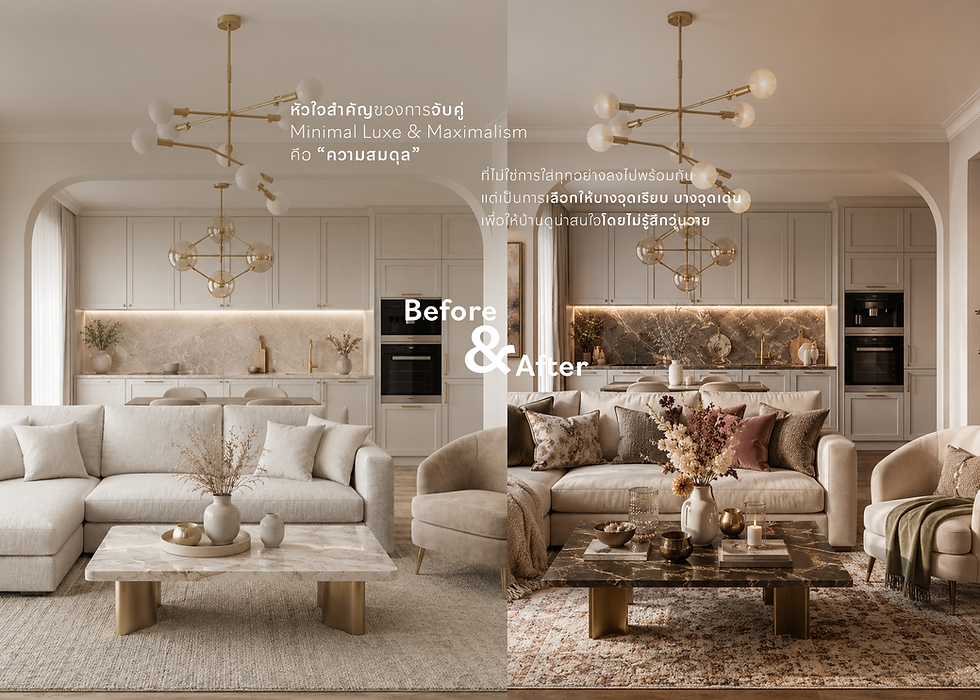
The key is balance — not piling everything in at once but choosing where to keep things simple and where to let something shine, so the home feels interesting without feeling chaotic.
1. Use Minimal Luxe as the Foundation

To avoid a home feeling too heavy, start by laying the groundwork with Minimal Luxe — light-toned walls, wood or stone-patterned tile flooring, clean-lined furniture, and warm lighting. Then gradually layer in Maximalist elements, one at a time.
This approach keeps the home feeling open, clean, and luxurious, while still having enough detail to make each corner memorable.
2. Choose Just 1–2 Focal Points per Room

Blending these two styles doesn't mean every corner needs to stand out equally — that can make a room feel overcrowded. Instead, pick just one or two "hero" elements per room: a headboard wall, a statement sofa color, a specially designed lamp, or a large wall art piece.
Once there's a clear focal point, the rest of the room should stay simpler, so the overall look feels balanced rather than competing for attention.
3. Keep the Color Palette Cohesive
While Maximalism opens the door to more color and pattern, when paired with Minimal Luxe, it's important to keep the palette controlled. Use a base of cream, brown, gray, black, or gold, then add a pop of standout color in just a few spots — emerald, green, deep navy, burgundy, or brick orange. Controlling the palette keeps the home feeling unified, even with a variety of decor pieces and patterns.
4. Use Luxurious Materials to Balance the Boldness


Materials are another key tool for elevating a home's premium feel — marble, natural wood, velvet, leather, mirrored glass, gold metal, or champagne-toned stainless steel. These materials help elevate Maximalist elements, making them feel more refined and luxurious.
For example, a dark-toned sofa can look even more striking next to a marble coffee table, or a bold, patterned wall can feel more expensive when paired with gold metal frames and warm lighting.
5. Use Lighting to Set the Mood
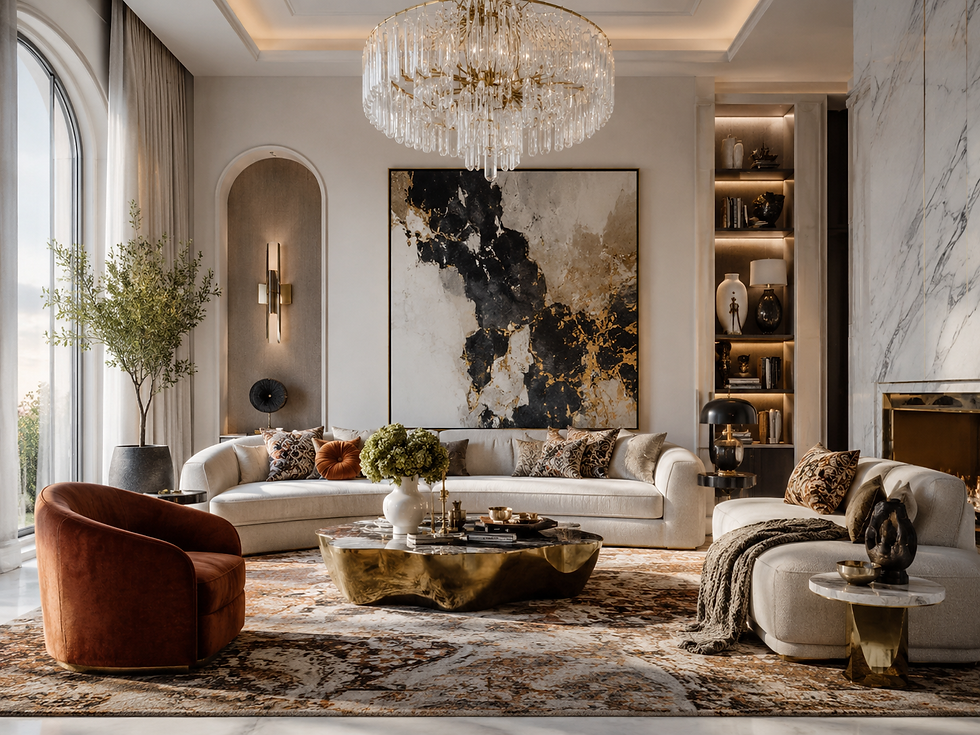
Lighting has a huge impact on making a detail-rich home feel warm and inviting — especially warm-toned lighting, hidden lighting, spotlighting, or beautifully designed lamps that add a touch of luxury.
For a home blending Minimal Luxe & Maximalism, lighting shouldn't be overly bright. Instead, it should have dimension and shadow, highlighting the room's focal points — illuminating artwork, an accent wall, or a special furniture piece.
Who Is This Style For?
Minimal Luxe & Maximalism suits people who love a refined, luxurious home but don't want it to feel too flat or static. It's ideal for those who want a home with real identity, great photo-worthy corners, and a space that clearly reflects who they are.
This is especially true for modern homes, which are no longer just places to live, but spaces for rest, work, hosting guests, and living life on one's own terms. Blending these two styles helps a home look beautiful, function well, and feel charming from every angle.
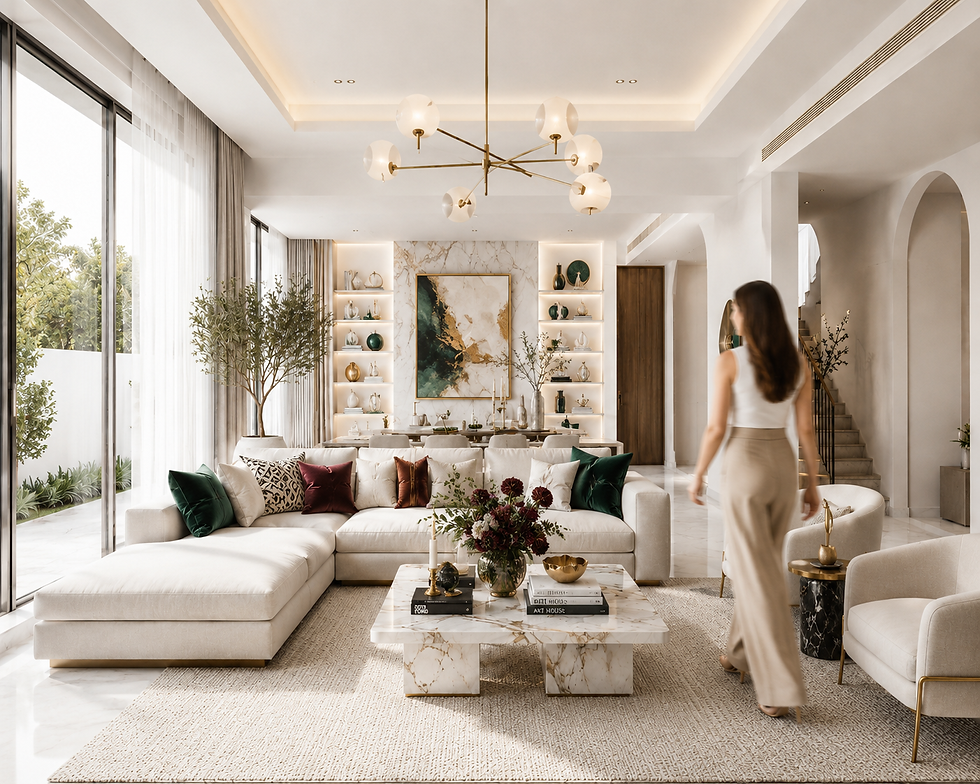
In short, pairing Minimal Luxe & Maximalism means bringing together two opposite ends of design in perfect proportion — one side offering calm, refined elegance, the other adding fun, boldness, and personality.
When designed with intention — choosing the right color tones, materials, lighting, and focal points — a home won't feel like too much. Instead, it becomes a space full of charm, luxury, dimension, and everyday livability.
Ready to Transform Your Space?
The Interior Designer team at The Precious is ready to design every space to reflect who you are and how you live, under the concept "Where Dreams Come Home" — with designs that care about both beauty and real-world function.
We offer full-service care, from concept development and design through to delivering premium-quality results. Because a great home isn't just beautiful — it has to feel comfortable to live in, every single day.
THE PRECIOUS — WHERE DREAMS COME HOME
Comments